
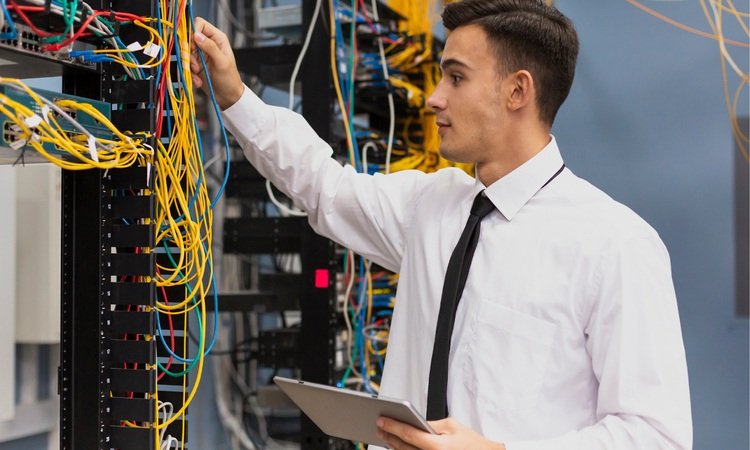
Essential Skills Every Computer Network Specialist Needs To Succeed

The tech industry is one of the fastest-growing industries in the world, offering a wide range of job opportunities across various fields.
According to a recent report by the US Bureau of Labor Statistics, employment in computer and information technology occupations is projected to grow much faster than the average for all occupations from 2024 to 2034.
Among the diverse roles in this rapidly expanding sector, the “Computer Network Specialist” plays an essential role in troubleshooting computer networks, ensuring the smooth functioning of the organization.
Go through this post to know more about the skills required to thrive as a computer network specialist.
Essential Skills Required For Network Support Specialists
1. Technical Knowledge Of Networking
A network specialist must have strong insight of technical knowledge for networking.
This covers areas such as:
- Protocols, i.e, IP, DNS, HTTP, and TCP.
- Network devices such as routers, switches, firewalls, and modems.
- Familiarity with LAN, WAN, and VPN.
- Troubleshooting, i.e, solving issues related to network security and connectivity.
- Managing the cloud system.
2. Troubleshooting And Problem-Solving Skills
A network support technician spots the common issues, such as:
- Connectivity issues, i.e, slow internet connection.
- Hardware issues, such as routers or cables.
- IP Address configuration issue
- Malware security (protecting the system from malicious software)
- Addressing bugs
3. Knowledge Of Network Security
A certified network support technician masters the essential principles, like:
- Encryption: Converting data into a secure folder, protected with a “decryption key.”
- Firewall: It monitors incoming and outgoing traffic by blocking unauthorized access.
- VPNs (Virtual Private Networks): Secure, encrypted connections over private networks, allowing users to send and receive their data privately.
4. Familiarity With Network Operating Systems And Software
They need to be familiar with the operating systems, i.e, Windows Server and Linux. These tools help manage and control how the network runs.
A technician also monitors, optimizes, and analyzes network software. Using this technician, monitor the traffic.
5. Communication And Collaboration Skills
When working with the IT team or client, clear communication plays an important role in understanding the issue and solutions. A clear conversation helps the technical team explain issues to non non-technical team.
Good communication and teamwork skills are the key to maintaining smooth operations.
6. Continuous Learning And Adaptability
Learning is essential for a network technician, as staying updated with the latest trends and network technician certifications is crucial for career growth. The technician must pursue a new course and certification to enhance their skills
This learning helps them stay updated in this competitive society.
These foundations show that certified network support technicians maintain and troubleshoot the network skillfully.
Final Thought
In today’s rapidly growing tech industry, becoming a certified network support technician requires a strong foundation in various essential skills. From mastering technical knowledge to troubleshooting, these technicians ensure that the network runs securely and smoothly.
By developing these skills, computer technicians boost efficiency for businesses and organizations.