The Real Difference Between Professional and Store-Bought Teeth Whitening

Teeth whitening is one of the most popular cosmetic dental treatments — and one of the most confusing, given how many over-the-counter options exist alongside professional treatments. Understanding what actually separates these approaches helps patients make choices that produce the results they’re looking for.
What Causes Tooth Discolouration
Not all tooth staining responds the same way to whitening treatment. Understanding the type of staining present is the first step toward choosing an effective approach.
Extrinsic staining accumulates on the outer surface of enamel from food, drinks, and tobacco. Coffee, tea, red wine, and dark berries are the most common contributors. This type of staining is the most responsive to whitening treatment because the bleaching agent can reach the discoloured compounds directly.
Intrinsic staining originates within the tooth structure itself — from medications taken during tooth development (certain antibiotics), excessive fluoride exposure, trauma, or the natural darkening that occurs as enamel thins with age. Intrinsic staining is more resistant to whitening and may require different cosmetic approaches — such as veneers or bonding — for significant improvement.
A professional consultation identifies which type of staining is present and recommends the approach most likely to produce meaningful results.
Why Professional Whitening Produces Different Results
The active ingredient in most whitening products — hydrogen peroxide or its precursor carbamide peroxide — is the same in both professional and over-the-counter products. The differences that produce different results are concentration, contact time, and the fit and customisation of delivery.
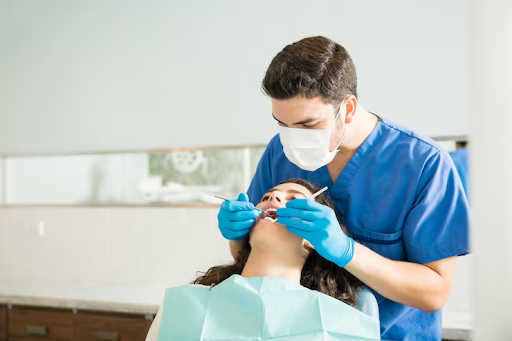
Professional in-office whitening uses significantly higher concentrations of bleaching agent than any over-the-counter product. Treatment is performed under clinical supervision, which allows for appropriate management of the gum tissue and monitoring of the tooth response. The result is a more pronounced change achieved in a single appointment.
Custom take-home trays provided by a dentist address the second significant limitation of over-the-counter products: fit. Store-bought trays are generic and allow the bleaching gel to spread unevenly or contact the gums. Custom trays fabricated from a precise impression ensure consistent coverage of every tooth surface and minimal gel contact with soft tissue — producing more even results and reducing sensitivity.
The Limitations of Whitening — What It Can’t Change
Whitening treatment affects natural tooth enamel but does not change the colour of dental restorations — crowns, veneers, bonding, and tooth-coloured fillings will not respond to bleaching. This is clinically significant: patients with visible restorations on front teeth need to understand that whitening may create a colour mismatch between natural teeth and existing restorations.
This is why professional assessment before whitening is particularly valuable — identifying existing restorations and planning treatment to achieve a result that looks consistent across all visible teeth.
Managing Sensitivity
Tooth sensitivity during and after whitening is the most common side effect, and it’s one that professional treatment manages more effectively than over-the-counter products. Desensitising agents applied before and after treatment, lower-concentration options for sensitive patients, and post-treatment remineralisation protocols are all tools available in a clinical setting that generic products don’t offer.
Patients with a history of significant sensitivity are best assessed professionally before beginning any whitening regimen.
Maintaining Results
Whitening results are not permanent — they fade over time at a rate influenced by diet and lifestyle. Coffee, tea, red wine, tobacco, and dark-coloured foods accelerate staining. Maintaining results involves reasonable dietary moderation, consistent oral hygiene, and periodic touch-up treatment.
Custom take-home trays from a dental office make maintenance straightforward — the trays can be used with touch-up gel periodically to keep results stable rather than requiring a full treatment cycle.
For patients interested in cosmetic teeth whitening in Colorado Springs, Robison Dental offers both in-office and custom take-home options, with a professional assessment that determines which approach is most likely to produce the results each patient is looking for.
FAQs
Q: How long do professional whitening results typically last? With periodic maintenance, professional whitening results can last one to three years. Without maintenance and with significant dietary staining habits, results may fade more quickly.
Q: Is whitening safe for tooth enamel? Clinical evidence consistently supports the safety of professionally administered whitening for enamel at appropriate concentrations and with correct application protocols. Over-use or misapplication of high-concentration products without professional guidance carries more risk.
Q: Can whitening help with all types of staining? Whitening is most effective for extrinsic staining from food, drink, and tobacco. Intrinsic staining, grey discolouration, and fluorosis respond poorly to bleaching and may require alternative cosmetic approaches.