
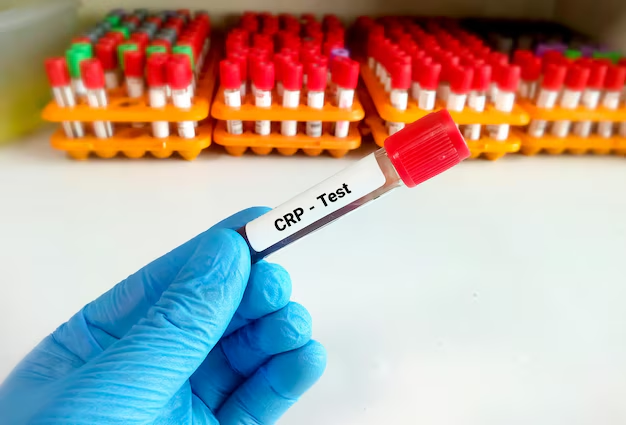
How Does a CRP ELISA Kit Work for Measuring Inflammation?

A CRP ELISA kit provides a quantitative platform for measuring C-reactive protein (CRP), the most widely used clinical and research marker of systemic inflammation and acute phase response. CRP is a pentameric plasma protein produced primarily by hepatocytes in response to interleukin-6 (IL-6) signaling during infection, tissue injury, or inflammatory disease. The combination of CRP’s dramatic concentration changes during acute inflammation, its long track record as a clinical marker, and the accessibility of ELISA technology makes CRP ELISA kits among the most frequently used quantitative immunoassay tools in both hospital research departments and academic laboratories worldwide.
Biological Significance of CRP
CRP belongs to the pentraxin family and plays active roles in innate immunity: it recognizes phosphocholine on the surfaces of damaged cells and pathogens, activates the classical complement pathway, and enhances phagocytosis via Fc receptors on macrophages. Its plasma concentration rises dramatically — up to 1,000-fold — within 24–72 hours of an acute inflammatory stimulus, making it one of the most sensitive and clinically actionable acute phase proteins. The speed and magnitude of the CRP response are themselves diagnostically useful: a rapid CRP elevation within 12–24 hours of symptom onset is more consistent with bacterial infection, while slower or more modest responses may indicate viral infection or chronic inflammatory conditions.
In cardiovascular research, high-sensitivity CRP (hsCRP) — measured at concentrations below standard clinical detection limits — is an independent predictor of myocardial infarction and stroke risk, even in apparently healthy individuals. Prospective epidemiological studies have established hsCRP as a cardiovascular risk marker with predictive value beyond traditional lipid panels, and its measurement is now recommended in cardiovascular risk stratification guidelines for intermediate-risk patients.
How CRP ELISA Works
CRP ELISA kits for human samples typically use the sandwich immunoassay format. An anti-CRP capture antibody is pre-coated on microplate wells. Serum, plasma, or diluted biological fluids are applied and CRP binds to the capture antibody. A biotinylated anti-CRP detection antibody is then added, recognizing a different epitope on captured CRP. Streptavidin-HRP binds the biotin tag, linking enzymatic amplification to the captured complex. TMB substrate colorimetric development generates a signal proportional to CRP concentration, and absorbance at 450 nm is used to interpolate CRP concentration from a recombinant standard curve. The dual-antibody sandwich design provides inherently high specificity, as detection depends on simultaneous recognition of two non-overlapping epitopes on the same CRP molecule.
Sample Type Compatibility
CRP ELISA kits are typically validated for serum (the most common matrix), EDTA or heparin plasma, cell culture supernatants for in vitro inflammation models, and cerebrospinal fluid with appropriate sensitivity kits. Hemolyzed or lipemic samples may interfere with optical readings and should be avoided. High-protein samples such as undiluted serum from acutely ill patients may require dilution before assay to bring CRP concentrations within the kit’s detection range — most kits provide guidance on minimum dilution requirements for clinical samples.
Standard vs. High-Sensitivity CRP ELISA
Standard CRP ELISA kits with detection ranges typically of 0.5–200 ng/mL are used for diagnosing acute infection, monitoring sepsis, and tracking post-surgical inflammation. High-sensitivity CRP (hsCRP) ELISA kits with detection ranges typically of 0.01–10 ng/mL are used in cardiovascular risk stratification, epidemiological studies, and subclinical inflammation research where baseline CRP variation at low concentrations carries clinical meaning. The choice between standard and hsCRP kits depends on the expected CRP range in the study population and the clinical or research question being addressed. Using a standard-sensitivity kit in a cardiovascular cohort of apparently healthy individuals will likely result in many samples reading below the detection limit — a situation that undermines statistical analysis and requires kit reformulation or upgrade.
Research Applications
- Infectious disease: Monitoring CRP kinetics in bacterial vs. viral infection
- Rheumatology: Quantifying CRP in patients with autoimmune conditions (rheumatoid arthritis, lupus)
- Cardiovascular research: Assessing hsCRP as a risk factor for atherosclerosis
- Oncology: Investigating CRP as a prognostic marker in cancer-associated inflammation
- Drug studies: Evaluating anti-inflammatory efficacy of compounds in preclinical and clinical trials
Conclusion
CRP ELISA kits are essential quantitative tools for inflammation research across clinical, epidemiological, and basic science contexts. Their sensitivity, established validation protocols, and compatibility with standard laboratory equipment make them accessible to a broad range of research programs. Whether assessing acute infection, chronic inflammatory conditions, or cardiovascular risk, validated CRP ELISA kits deliver the specificity and reproducibility required for reliable, actionable data across the full spectrum of inflammation-related research.