
Osteopathic Therapies: What They Are & How They Work

Manual osteopathy is a growing component of integrative health care in Ontario, and understanding what osteopathic therapies involve and how they differ from other manual health professions like chiropractic and physiotherapy helps patients make informed decisions about their care options. Osteopathy is a system of assessment and treatment based on the principle that the body functions as an integrated unit and that structural balance, unrestricted fluid dynamics, and the body’s inherent capacity for self-regulation are foundational to health.
Core Principles of Osteopathic Practice
Osteopathic philosophy rests on several foundational principles: the body is a functional unit in which all systems are interconnected; structure and function are reciprocally related; the body possesses inherent self-healing and self-regulating mechanisms; and rational treatment is based on understanding and supporting these principles in each individual patient. These principles guide the osteopathic practitioner’s assessment approach, which examines the whole body rather than focusing exclusively on the site of the presenting complaint.
Key Osteopathic Treatment Techniques
Soft Tissue Manipulation
Osteopathic soft tissue techniques use rhythmic, sustained, or stretching manipulations applied to muscles, fascia, and connective tissues to reduce tension, improve tissue quality, and normalize tone throughout the musculoskeletal system. These techniques are gentle, widely applicable across patient populations, and form the foundational manual component of most osteopathic treatment sessions.
Articulatory Techniques
Articulatory techniques move joints through their full range of motion in a rhythmic, gradually progressive manner to restore mobility, improve fluid exchange within the joint, and reduce restrictions in the surrounding periarticular tissues. These techniques are particularly valuable for spinal hypomobility, rib restrictions affecting breathing mechanics, and peripheral joint stiffness.
Craniosacral Therapy
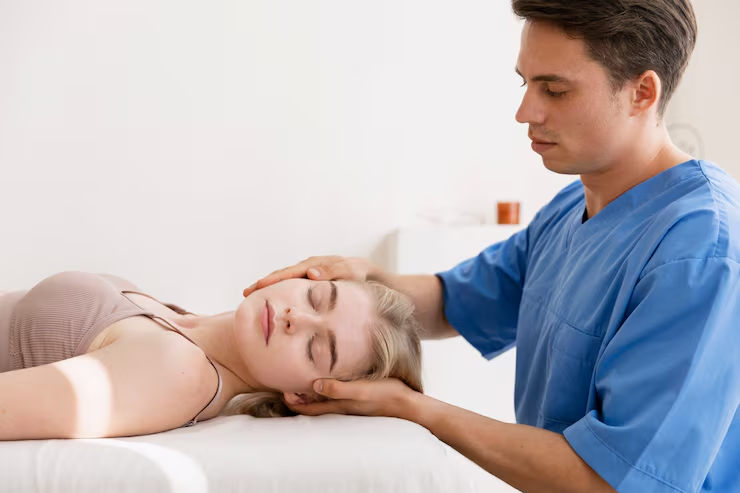
Craniosacral therapy is a gentle, low-force osteopathic technique that works with the subtle rhythmic movements of the craniosacral system — comprising the skull, sacrum, and the meninges and cerebrospinal fluid they contain. Practitioners use very light touch to assess and release restrictions in the craniosacral rhythm, with applications in headaches, TMJ dysfunction, post-concussion syndromes, and stress-related tension patterns.
Visceral Manipulation
Visceral techniques assess and address the mobility and motility of the abdominal and thoracic organs and their supporting ligamentous attachments. Restrictions in visceral mobility can contribute to musculoskeletal tension patterns, postural adaptations, and referred pain presentations that may not respond fully to structural manual therapy approaches alone.
What Conditions Respond to Osteopathic Treatment?
Osteopathic therapies have been applied across a broad range of presentations including chronic low back and neck pain, headaches and migraines, digestive dysfunction, postural strain syndromes, breathing disorders, infant colic and feeding difficulties, and recovery from trauma including motor vehicle accidents and surgical procedures. As with all manual therapies, clinical evidence is strongest for musculoskeletal conditions, particularly spinal pain.
Conclusion
Osteopathic therapies offer a whole-body, structurally informed approach to health and wellbeing that complements and extends the care available through other manual health professions. Whether used as a primary treatment modality or integrated within a multi-disciplinary clinic setting alongside physiotherapy, chiropractic, and massage therapy, osteopathic care provides a thoughtful, patient-centered alternative for individuals seeking manual therapy that addresses the body as an integrated, interconnected system.