Common Mistakes to Avoid When Using a Hydraulic Torque Wrench on Site

A hydraulic wrench is only as reliable as the technique behind it. Studies on bolted joint failures show that improper tightening accounts for a significant share of flange leaks and equipment downtime in the oil and gas, power, and heavy manufacturing sectors. Even the most advanced hydraulic wrench cannot compensate for poor setup, incorrect calibration, or rushed procedures on site. Understanding the common mistakes technicians make and how to avoid them can protect both equipment and personnel while keeping projects on schedule.
1. Skipping Calibration Checks
One common mistake in this regard is the failure to calibrate the hydraulic wrench before use. Seals wear over time while gauges lose their calibration, and this can adversely affect the torque setting even in situations where the hydraulic wrench seems to work normally. Hydraulic wrenches should be calibrated periodically and whenever maintenance is done on the tools. The problem with an uncalibrated hydraulic wrench is that it may set torque settings that are either excessively high or low. Both scenarios increase the possibility of failure.
2. Incorrectly Set-up Reaction Arms
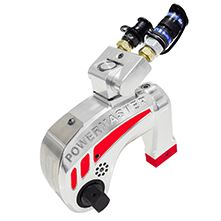
The reaction arm handles the reactive force generated when tightening a hydraulic wrench. Failure to ensure that the reaction arms are correctly set up, or to mount them on an unstable surface, may cause the hydraulic wrench to slip or fail to apply a uniform force to the bolt.
3. Disregarding the Torque Chart by the Manufacturer
Each bolt size, grade, and lubrication has a certain required torque value. Instead of looking at the chart, people usually take the liberty of choosing an approximate torque value. This results in either under-tightening or over-tightening of the bolt, causing problems such as stretching or shearing of the bolt, or even making the joint prone to vibration loosening. Charts must be considered obligatory, not optional.
4. Not Checking Hoses and Fittings
Hydraulic hoses and fittings are subject to the effects of constant pressure cycles as well as tough working conditions on-site. Deteriorated or poorly fitted hoses may result in pressure failure in the middle of the operation causing an inconsistent torque application.
5. Applying Torque in the Wrong Sequence
Bolts on a flange must be tightened in a specific crossing pattern not sequentially around the circle. Skipping the correct tightening sequence creates uneven stress distribution which can warp gaskets or cause leaks even if every bolt reaches the target torque individually. Following a star or cross pattern, applied in stages, is essential for even load distribution.
Conclusion
To avoid these errors, one has to be disciplined and do the following: recalibrate frequently, adhere to the torque chart, check the equipment before use, and never skip the tightening process. A well-maintained, properly used hydraulic wrench will not only ensure the safety of the joint but also that of the people in the vicinity. For organizations that require both flange and bolting maintenance services, Bolting Systems provides durable hydraulic wrenches and is also one of the reliable flange spreader suppliers. Contact Bolting Systems today for more information.