
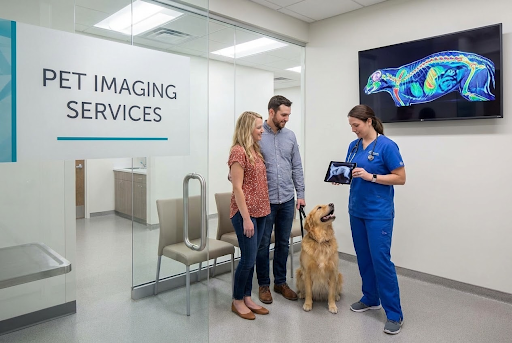
What Are Advanced Pet Imaging Services and When Are They Needed?

When basic X‑rays and exams cannot fully explain a pet’s illness, many families turn to advanced pet imaging services for answers. These technologies, which include CT and MRI, are part of advanced veterinary medical imaging and give veterinarians a three‑dimensional look inside the body. With clearer information about bones, organs, and the nervous system, the veterinary team can diagnose complex problems more accurately and plan targeted treatments.
Defining Advanced Pet Imaging
Advanced pet imaging refers to diagnostic tools beyond routine radiographs and ultrasound. The most common modalities include:
- CT (computed tomography), which uses X‑rays and computer processing to create cross-sectional images.
- MRI (magnetic resonance imaging), which uses magnetic fields and radio waves to visualize soft tissues in high detail.
These veterinary imaging services are often provided at specialized centers or referral hospitals with equipment and teams dedicated to complex cases.
When Do Pets Need Advanced Imaging?
Not every patient requires high‑end imaging, but it becomes important when:
- Neurological signs suggest spinal cord or brain disease.
- Chronic pain persists despite normal X‑rays.
- Tumors are suspected and must be precisely located and staged.
- Surgical planning demands a detailed map of the affected area.
In many scenarios, advanced veterinary medical imaging reveals critical details that cannot be detected with standard tests, such as subtle disc herniations, small brain lesions, or hidden masses.
CT vs. MRI: How Do They Differ?
Both CT and MRI are advanced pet imaging services, but they serve different diagnostic needs.
CT Scans
CT is particularly valuable for:
- Complex bony structures like the skull, vertebrae, and joints.
- Evaluating nasal passages, sinuses, and middle ears.
- Detecting lung disease and certain abdominal conditions.
CT scans are relatively fast and often used in trauma cases or when a quick overview of internal structures is needed.
MRI
MRI excels at imaging soft tissues, especially the brain and spinal cord. It is the preferred modality in many neurological cases because it can:
- Detect inflammation, tumors, and strokes in the brain.
- Reveal spinal cord compression from intervertebral disc disease.
- Identify inflammatory or degenerative changes in nervous tissue.
Although MRI typically takes longer than CT and requires closer anesthesia monitoring, it offers unmatched detail for neurological evaluation.
The Role of Advanced Imaging in Treatment Planning
Once high‑resolution images are obtained, specialists interpret them in the context of the pet’s history and physical exam. This process helps:
- Confirm or refine the working diagnosis.
- Determine whether surgery, medical therapy, or both are indicated.
- Assess the extent of disease for oncology cases.
- Provide owners with a more accurate prognosis.
Veterinary imaging services are not just about finding abnormalities; they guide real-world decisions about how to manage a pet’s condition.
Safety, Anesthesia, and Pet Comfort
Because CT and MRI require pets to remain still, general anesthesia or deep sedation is usually necessary. Before imaging, veterinarians evaluate the animal’s overall health with exams and laboratory tests to minimize risk. During the procedure, teams monitor vital signs continuously and adjust anesthesia as needed.
Radiation exposure is a consideration for CT, but doses are controlled and justified by the diagnostic value obtained. MRI does not use ionizing radiation, but the powerful magnets require strict safety protocols.
A Note on External Resources
Pet owners researching advanced veterinary care sometimes explore other interests online as well. For example, those planning a trip might look up activities such as <a href=”https://example.com/open-water-dive-training-koh-tao”>open water dive training Koh Tao</a>. While unrelated to pet health, it illustrates how specialized services in different fields rely on expert guidance and appropriate equipment to ensure safety and success.
Conclusion: Clarity for Complex Cases
Advanced pet imaging services offer veterinarians a deeper look into the body, transforming uncertain symptoms into visible, interpretable findings. By leveraging CT and MRI as part of advanced veterinary medical imaging, specialists can diagnose challenging conditions, plan precise treatments, and provide more informed guidance to families. When standard tests leave questions unanswered, these sophisticated veterinary imaging services often supply the clarity needed to move forward.