
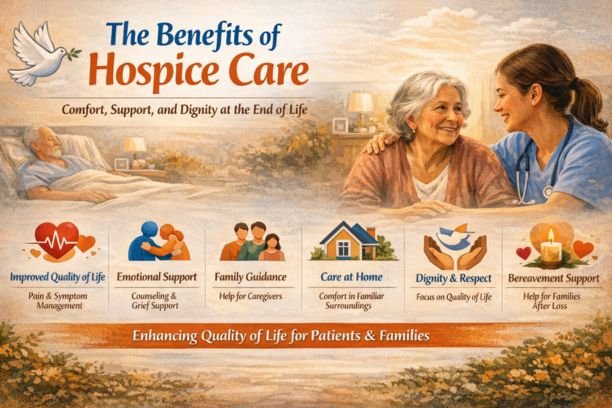
Benefits of Hospice Care: Compassionate Support for Patients and Families

Hospice care focuses on comfort, dignity, and quality of life for individuals facing serious or life-limiting illnesses. Instead of aggressive treatments, hospice emphasizes pain relief, emotional support, and holistic care. Understanding the benefits of hospice care can help patients and families make informed decisions during challenging times.
This guide explains how hospice care works, who it helps, and why it plays a vital role in end-of-life care.
What Is Hospice Care?
Hospice care is specialized medical care designed for patients with terminal illnesses, typically when curative treatment is no longer effective or desired. Care is provided by a multidisciplinary team that may include doctors, nurses, social workers, counselors, and trained volunteers.
Hospice services can be delivered at home, in hospice centers, hospitals, or nursing facilities, ensuring comfort in a familiar environment.
Key Benefits of Hospice Care
1. Improved Quality of Life
One of the most important benefits of hospice care is improved quality of life. Hospice focuses on managing pain, symptoms, and discomfort, allowing patients to live their remaining days as comfortably as possible.
Patients often experience:
- Better pain and symptom control
- Reduced stress and anxiety
- Greater emotional well-being
2. Comprehensive Pain and Symptom Management
Hospice care specializes in pain relief and symptom control, including:
- Chronic pain
- Shortness of breath
- Nausea and fatigue
- Insomnia and anxiety
The care team continuously adjusts treatment plans to ensure maximum comfort without unnecessary medical interventions.
3. Emotional and Psychological Support
Facing a life-limiting illness can be emotionally overwhelming. Hospice care provides counseling and emotional support to both patients and families.
These services help:
- Reduce fear and depression
- Offer coping strategies
- Provide grief and bereavement counseling
This emotional care is a core part of the benefits of hospice care.
4. Support for Family Members and Caregivers
Hospice care does not focus only on the patient—it also supports family members. Caregivers receive education, guidance, and respite care to reduce burnout.
Families benefit from:
- 24/7 access to medical support
- Help with caregiving responsibilities
- Guidance in making difficult decisions
5. Care in the Comfort of Home
Many patients prefer to remain at home rather than in a hospital. Hospice makes this possible by delivering professional medical care wherever the patient lives.
Home-based hospice care offers:
- Familiar surroundings
- Greater peace and comfort
- More meaningful time with loved ones
6. Personalized and Holistic Care
Hospice care addresses physical, emotional, social, and spiritual needs. Care plans are tailored to the individual’s values, beliefs, and preferences.
This holistic approach ensures:
- Respect for personal wishes
- Spiritual or cultural support
- A dignified end-of-life experience
7. Reduced Hospital Visits and Medical Costs
Another major benefit of hospice care is fewer emergency room visits and hospitalizations. Hospice teams proactively manage symptoms, preventing medical crises.
In many cases, hospice care is covered by insurance or Medicare, reducing financial stress for families.
8. Dignity and Respect at End of Life
Hospice care prioritizes dignity, choice, and respect. Patients maintain control over their care decisions, helping them feel valued and heard.
This approach allows individuals to focus on comfort, relationships, and personal peace rather than medical procedures.
Who Can Benefit from Hospice Care?
Hospice care is suitable for patients with:
- Advanced cancer
- Heart disease
- Lung disease
- Dementia or Alzheimer’s
- Neurological disorders
Early enrollment can help patients experience the full benefits of hospice care rather than waiting until the final days.
Final Thoughts
The benefits of hospice care extend far beyond medical treatment. By focusing on comfort, compassion, and dignity, hospice care supports both patients and families during one of life’s most difficult journeys.
Choosing hospice is not about giving up—it’s about choosing comfort, peace, and quality of life.