
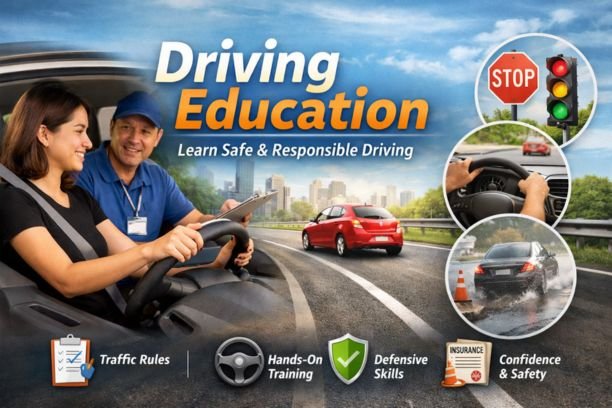
Driving Education: A Complete Guide to Learning Safe and Responsible Driving

Driving education plays a vital role in shaping responsible drivers and improving road safety. Whether you are a beginner learning how to drive for the first time or an experienced driver looking to refresh your skills, quality driving education helps build confidence, awareness, and lifelong safe driving habits.
In this guide, we’ll explore what driving education is, why it matters, its benefits, and how to choose the right driving education program for your needs.
What Is Driving Education?
Driving education refers to structured training programs designed to teach individuals how to operate a vehicle safely and responsibly. These programs include both theoretical knowledge and practical driving skills, covering traffic laws, road signs, defensive driving techniques, and real-world driving scenarios.
Driving education is often provided by:
- Certified driving schools
- Professional driving instructors
- Online driving education platforms
- Government-approved driver training programs
Why Driving Education Is Important
Proper driving education reduces accidents and creates safer roads for everyone. Many road incidents occur due to lack of training, poor judgment, or misunderstanding traffic laws.
Key Reasons Driving Education Matters:
- Improves road safety and awareness
- Reduces accident and injury risks
- Builds confidence behind the wheel
- Encourages responsible and defensive driving
- Helps drivers understand traffic laws and regulations
Well-trained drivers are more likely to react calmly and correctly in emergencies.
Benefits of Professional Driving Education
1. Better Understanding of Traffic Rules
Driving education ensures learners fully understand road signs, traffic signals, and right-of-way rules.
2. Hands-On Driving Experience
Practical lessons provide real-world exposure, helping students handle different road conditions and traffic situations.
3. Defensive Driving Skills
Professional driving education teaches how to anticipate hazards, avoid collisions, and drive safely in adverse conditions.
4. Increased Confidence
With proper guidance, new drivers gain confidence and reduce anxiety while driving.
5. Lower Insurance Costs
Many insurance companies offer discounts to drivers who complete certified driving education programs.
Types of Driving Education Programs
Beginner Driving Education
Designed for first-time drivers, covering basic vehicle controls, parking, lane discipline, and road etiquette.
Teen Driving Education
Specially structured programs focusing on young drivers, emphasizing safety, focus, and responsible decision-making.
Adult Driving Education
Ideal for adults learning to drive later in life or those returning to driving after a long break.
Defensive Driving Courses
Advanced programs that focus on accident prevention, hazard awareness, and emergency handling.
Online Driving Education
Flexible learning options that cover theory lessons digitally, often paired with in-car training.
How to Choose the Right Driving Education Program
When selecting a driving education course, consider the following factors:
- Certified and experienced instructors
- Structured curriculum with theory and practice
- Modern training vehicles
- Flexible schedules
- Positive reviews and success rates
- Government or DMV approval
Choosing the right driving education provider can significantly impact your learning experience.
Driving Education and Road Safety
Statistics consistently show that drivers who complete formal driving education are less likely to be involved in accidents. Education encourages patience, awareness, and respect for traffic laws—qualities that contribute to safer roads and reduced fatalities.
Governments and safety organizations worldwide strongly recommend driving education as a foundation for responsible driving.
Final Thoughts
Investing in driving education is not just about passing a driving test—it’s about becoming a safe, confident, and responsible driver for life. Whether you’re a beginner or looking to enhance your skills, a quality driving education program can make a lasting difference.
If you want safer roads, better driving habits, and long-term confidence, driving education is the first step.