
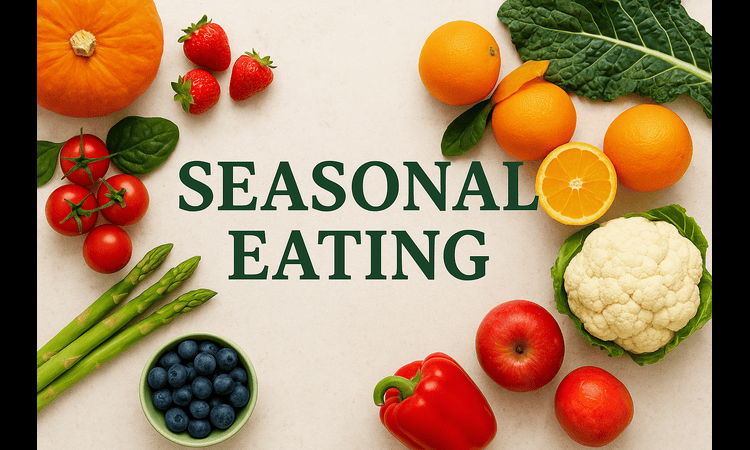
The Ultimate 2025 Guide for Better Health & Budget-Friendly Nutrition

Seasonal eating has become one of the biggest food and health trends in 2025 — and for good reason. Eating foods that naturally grow in a particular season isn’t only healthier; it can also save you money, reduce your carbon footprint, and improve food quality. In this guide, we’ll explore what seasonal eating is, why it’s important, and how you can start today.
What Is Seasonal Eating?
Seasonal eating means consuming fruits, vegetables, and foods that are naturally harvested during the current season in your local region.
For example:
- Winter: citrus fruits, leafy greens, root veggies
- Summer: berries, melons, tomatoes, cucumbers
Eating in season supports your health and ensures you enjoy the freshest, most nutrient-rich produce.
Why Seasonal Eating Matters (Top Benefits)
1. Higher Nutritional Value
Seasonal foods are harvested at their peak ripeness, meaning:
- Better nutrient levels
- More antioxidants
- Natural flavors (no artificial ripening)
2. More Affordable
Because seasonal produce is available in abundance, prices automatically drop.
This means:
- Lower grocery bills
- Better value for money
- Fresher quality
3. Better Taste & Freshness
Foods grown in season taste richer and fresher because they aren’t artificially stored for long periods.
You’ll enjoy:
- Sweeter fruits
- Crunchier vegetables
- More flavor-packed meals
4. Supports Local Farmers
Buying seasonal foods often means buying local:
- Boosts local economy
- Reduces carbon footprint
- Creates sustainable food systems
5. Environmentally Friendly
Seasonal foods require:
- Fewer chemicals
- Less refrigeration
- Minimal transport
This makes seasonal eating a natural eco-friendly practice.
What Foods Are in Season? (2025 Seasonal Food List)
Spring
- Strawberries
- Spinach
- Peas
- Asparagus
- Radish
Summer
- Watermelon
- Mango
- Cucumber
- Tomatoes
- Sweet corn
- Berries
Autumn
- Apples
- Pumpkins
- Carrots
- Broccoli
- Pears
- Beets
Winter
- Oranges
- Kale
- Cauliflower
- Sweet potatoes
- Pomegranates
How to Start Eating Seasonally
1. Check Local Seasonal Charts
Look for seasonal food charts based on your region or climate.
2. Shop at Local Farmers’ Markets
This guarantees you’re buying locally grown, seasonal produce.
3. Plan Weekly Meals Around Seasonal Foods
Meal planning helps you:
- Save time
- Reduce food waste
- Eat healthier consistently
4. Add Seasonal Recipes
Try smoothies in summer, warm soups in winter, or fresh salads in spring.
5. Read Food Labels
Look for:
- “Locally grown”
- “Harvested this month”
- Avoid items imported off-season
Seasonal Eating Meal Ideas (Easy & Healthy)
Summer Meal Ideas
- Berry smoothie bowl
- Tomato cucumber salad
- Grilled corn with herbs
Winter Meal Ideas
- Sweet potato soup
- Citrus detox drink
- Cauliflower stir-fry
Autumn Meal Ideas
- Pumpkin oatmeal
- Apple cinnamon smoothie
- Beetroot salad
Spring Meal Ideas
- Fresh pea soup
- Asparagus pasta
- Strawberry chia pudding
Seasonal Eating for Weight Loss & Wellness
Seasonal foods:
- Are lower in calories
- Reduce cravings (because they’re nutrient-rich)
- Improve digestion
- Support natural detox
This makes seasonal eating a smart and sustainable method for weight management.
Conclusion: Seasonal Eating Is the Smartest Way to Eat in 2025
Seasonal eating isn’t just a trend — it’s a healthier, tastier, and more sustainable way to live.
Whether you want:
- Better nutrition
- Reduced grocery costs
- Improved health
- Eco-friendly habits
Seasonal eating fits perfectly into a modern lifestyle.
Start small. Start local. Start seasonal.