
When Should You See a Veterinary Neurologist in Maryland?

For pet owners across the Mid-Atlantic region, access to specialist veterinary neurology in Maryland is a critical resource when a beloved dog or cat develops neurological symptoms beyond the scope of general practice. Knowing when a referral to a veterinary neurologist is warranted — and what to expect from the consultation process — helps owners advocate more effectively for their pet’s care and avoid delays that can affect outcomes in neurological emergencies.
Veterinary neurology consults are available through specialist referral practices in Maryland and cover the diagnosis and treatment of conditions affecting the brain, spinal cord, peripheral nerves, and muscles in dogs, cats, and other companion animals.
What Does a Veterinary Neurologist Do?
A board-certified veterinary neurologist holds a Doctor of Veterinary Medicine degree followed by a one-year internship, a three-year neurology residency, and successful completion of the American College of Veterinary Internal Medicine neurology board examination. This represents approximately eight years of specialist training beyond the DVM.
In clinical practice, a veterinary neurologist in Maryland evaluates patients referred from primary care practices for conditions including seizures, spinal cord disease, brain disorders, peripheral neuropathies, and neuromuscular diseases. They interpret advanced imaging studies, perform electrodiagnostic testing, and provide both surgical and medical neurological treatment.
Signs That Warrant a Veterinary Neurology Consult
Seizures
Any dog or cat experiencing recurrent seizures, first seizures in middle-aged or older animals, or seizures lasting more than five minutes requires specialist neurological evaluation. A veterinary neurologist can distinguish between primary epilepsy and seizures caused by structural brain disease, metabolic disorders, or toxin exposure — a distinction that dramatically shapes the appropriate treatment approach.
Sudden or Progressive Paralysis
Sudden hindlimb or forelimb weakness, dragging of limbs, or complete paralysis demands same-day or next-day neurology consultation. Early specialist evaluation improves outcomes significantly in spinal cord compression cases where surgical timing is critical.
Altered Mentation and Behaviour Changes
Head pressing, circling, disorientation, sudden aggression, and personality changes can all indicate intracranial disease. These signs should prompt immediate referral to a veterinary neurologist rather than expectant management at the primary care level.
Head Tilt and Vestibular Disease
While vestibular disease is common and often benign in older dogs, a persistent or worsening head tilt, nystagmus, or falling to one side warrants specialist evaluation to differentiate peripheral (inner ear) from central (brainstem) vestibular disease — a distinction with very different prognostic and treatment implications.
Suspected Neuromuscular Disease
Generalised weakness, exercise intolerance, muscle wasting, and difficulty swallowing or breathing can indicate disorders of the peripheral nervous system or muscles. A veterinary neurologist performs electrodiagnostic testing and muscle or nerve biopsies to reach a specific diagnosis in these complex cases.
What Happens During a Veterinary Neurology Consult?
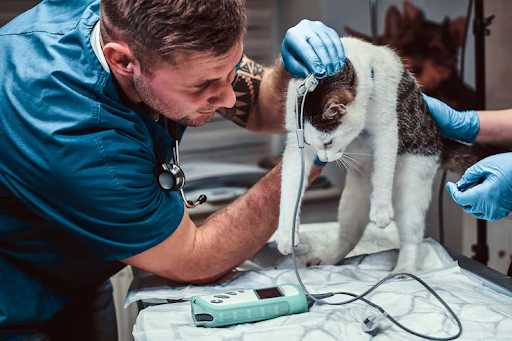
A veterinary neurology consultation begins with a detailed history — the owner’s description of the onset, progression, and character of symptoms is invaluable in directing the examination. The neurologist then performs a systematic neurological examination, assessing mentation, gait, postural reactions, spinal reflexes, and cranial nerve function. The examination takes 20 to 40 minutes and generates a neuroanatomical localisation — identifying which part of the nervous system is causing the observed signs.
Advanced imaging with MRI or CT is typically recommended to confirm the localisation and identify the specific pathology. Cerebrospinal fluid analysis, electrodiagnostic testing, and laboratory work may also be recommended depending on the clinical picture.
Conclusion
Veterinary neurology in Maryland provides pet owners with access to the specialist expertise needed to diagnose and treat complex neurological conditions accurately and effectively. When your primary care veterinarian recommends a neurology referral — or when your instinct tells you something is seriously wrong with your pet’s nervous system — acting promptly on that recommendation gives your companion the best possible chance of an accurate diagnosis and meaningful recovery.