
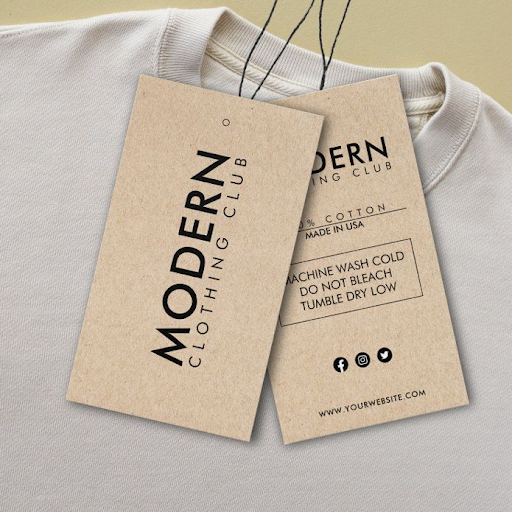
Custom Shirt Tags To Customize Each Clothing

One of these minimal details that alleviates the feel of a certain piece of clothing unobtrusively is custom shirt tags. An ordinary name is silent. A high-quality one says that a brand was concerned enough to complete the work. This is more crucial to small clothing makers than it may seem to most.
Even a plain tee would become the one which seems to be purchased in a real store, thanks to the right tag. It also aids buyers to remember the origin of the shirt. To get this part right, it does not require a massive budget or a factory. It only requires some consideration of what should be done by the label.
Choosing Label Fabric
The contents of a label determine the kind of touch they will have on the skin, as well as their washing durability. Cotton twill retains softness and custom shirt tags wholesale has good printability and is best used in shirts that can be worn daily. The sheen of satin is smooth and reflects the light and appears sharper on more dressy garments.
The woven cloth will have a raised soil which will last many years and retain its shape after numerous cycles in the machine. The choices often involve the intended use of the garment and when it is worn. A lightweight fabric fits thin summer tops, and a heavy one works for workwear. Trialling a few samples prior to taking the full run is a safe bet in the future.
Getting Size Right
When making an order, size does matter to most makers. When the tag is too large, it irritates the neck and becomes cut out by irritated consumers. A little one is so minute that it gets lost in the reading and is never noticed. The shirts mostly employ something about an inch in width and two inches in length. The range is flat on the collar and can even stay on the collar without sticking out.
Different sizes may be required in neck labels compared to hem labels since they are at different locations. An existing shirt which fits can be used for measurement to provide a strong starting point. It can be a good idea to order a test batch to determine the choice before a big run.
Print Or Woven
Printed and woven labels appear different and have varying prices. Ink on fabric is used to make printed labels that can inexpensively produce small runs and allow fine detail to be seen. The labels are made of fabric, and therefore the words are woven into the fabric, making the letters never fade or falter. Woven is more expensive in terms of the initial expenses due to the time that is required to prepare the loom.
Printed is suitable for brands trying out designs or swapping names frequently. The brands of woven suits will claim they want a brand to last as long as the shirt will last. Both are fine when the care instructions are adhered to. A choice between them is largely due to cost and the duration of one of the designs the brand intends to utilise.
Picking Your Colors
The colour used relates the label to the rest of the brand. On a white cloth, it is printed in black; it is clean and fits nearly any shirt. Identifying the shade of the shirt with the label forms a relatively small appearance, allowing the design to do the talking. The plain garments with bright tags serve as a little dimple to which customers pay attention.
The woven colour of labels is also important, as it predetermines the sharpness of the letters. Words are difficult to read at a glance, as there is low contrast between thread and fabric. The application on test pieces on real fabric demonstrates how it would appear in real light as opposed to a screen. This step does not involve a lot of time spent and avoids an expensive error.
Small Batch Orders
It is uncommon to have thousands of labels at once, and the number of suppliers that will serve a small run is increasing. With a few hundred in initial money to order, the cost of keeping up with orders is minimal and allows changes to occur later on design. The prices of minimum order quantities differ significantly amongst suppliers, rs and a few comparisons would be useful.
Others impose some unit charge setup fees which render small runs costly whilst others absorb these into the unit price. Waiting time varies as well, and prompt turnaround is important when the date of launch is imminent. Inquiry about rush services before ordering avoids a scramble in future. A small first order allows a brand the opportunity to test the responses of buyers, and then scale up.
Finding Suppliers
The experience of the entire process is determined by the supplier who owns the label, from the quote to delivery. Saving time is achieved by reading reviews and inquiring about which makers are their preferred choice. In a manner which photos are not able to demonstrate, samples convey real quality. Inquiries about turnaround time, shipping, and the reorder process before the first order help to avoid a shock.
There are those suppliers who provide design assistance, and others demand artwork that is already done. Understanding file formats helps to prevent reprints and time wastage. A prompt supplier will respond quickly to queries and, in effect, respond to issues quickly. The time to develop long-lasting rapport with a single supplier can be beneficial in the long run.
Storing And Reorder
The space occupied by labels is minimal, yet the labels require basic care before use. When they are stored custom logo tags in a dry place, moisture will not be able to damage the fabric and print as time goes by. It is easier to pack in a shorter time when receiving orders, as they are ordered by size and type. A record of the initial order aids in reordering products since suppliers usually require the specifications of the items once more.
Having a sample of each of the labels on hand would indicate what was accepted, and it would be easy to compare with new stock. Sudden and unexpected lows in running will discover the production and thus the tracking counts will be beneficial. The rearrangement of the early leaves allows shipping delays. An easy mechanism makes this aspect not a headache.
Conclusion
The use of custom shirt tags performs a thankless but still perceptible task for buyers who would not have given it any thought. They inform someone about the source of a shirt and demonstrate to a person that a craftsman is attentive to details. A couple of plans to hit the target and no enormous budget to get the print and colour and the fabric size right.
New brands can test ideas free of risk with small orders, and suppliers can make it easy. The effect is not, and the label is small. A real tag on the shirt makes it complete in a manner in which the plain shirt will never do. Any person developing a clothing brand ought to find custom shirt tags worthwhile.