Spring Balancer vs. Other Tool Suspension Systems: What’s Best for Your Facility

Choosing the right tool suspension system can make a real difference to productivity, safety, and equipment longevity on a busy factory floor. Workers who handle heavy power tools all day face constant strain on their arms and shoulders. Without proper support, this leads to fatigue, slower output, and a higher risk of workplace injury.
There are several ways to manage this problem. Some facilities still rely on manual handling or basic counterweight systems. Others have moved to more advanced setups, including digital spring balance scales and other tension-based suspension tools. But not every system fits every application. Understanding the differences helps facility managers make a choice that actually improves daily operations.
Manual Handling and Basic Counterweights
The most basic form is the lack of any suspension system altogether. Tools are lifted and carried manually, being put down after each use. This method works just fine when it comes to light and occasional work. However, when the same tool is lifted hundreds of times per day in an assembly-line environment, performing such operations manually becomes burdensome.
A counterbalance system offers a slight improvement over the previous one. It involves a stationary counterbalance that eliminates the need to lift heavy tools. Unfortunately, it cannot be adjusted according to varying tool weight or height requirements.
Pneumatic and Electric Balancers
Pneumatic and electric balancers make use of compressed air or motor power to lift tools. They provide better flexibility compared to counterweights, and they can be used in lifting different loads. Nevertheless, they have higher initial costs, high maintenance needs, and reliance on electricity or air. For facilities that do not have existing infrastructure for the use of these tools, installation costs may end up being very high. In addition, any disruptions in the power or air supply will disrupt the operation of the entire tool suspension system.
Spring Balancers
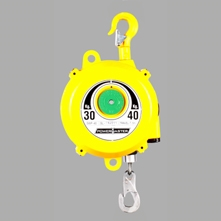
Spring Balancers provide an alternative that is easier and more reliable. It’s a mechanical device, utilizing a coiled spring housed inside the balancer, which offsets the weight of the tool, making the lifting and lowering of the tool easy. The spring balancer does not require compressed air, electricity, and any control systems. The tension of the spring balancer is adjustable, allowing it to offset different tool weights within its rating.
When it comes to the heavier applications, one can use a heavy duty spring scale balancer to lift tool weights that are too heavy for lighter spring balancers, without going into the complexities of power-assisted units. Spring Balancers therefore provide a middle ground. They are more versatile than static counterweights, while at the same time being much simpler and economical than electrical or pneumatic counterparts.
Which System Is Right for Your Facility?
The best choice depends on your specific needs. Facilities with light, occasional tool use might get by with manual handling. Those with existing pneumatic infrastructure and higher budgets may find electric or air-powered balancers worthwhile. But for most manufacturing and assembly environments, spring balancers strike the right balance between performance, cost, and reliability.
Spring balancers increase the efficiency of the repetitive tasks and make them more comfortable for employees. In cases where the facility lifts heavy tools all day long, choosing the proper rating is key to making the investment last longer.
Conclusion
The right tool suspension system should match the way your team actually works. If you are comparing options and want equipment built for durability and ease of use, explore Spring Balancer’s range. They offer reliable, low-maintenance support for tools of all weights, from standard models to heavy-duty capacities suited to demanding industrial environments.
Ready to find the right spring balancer for your facility? Explore their full range of spring balancer series today and get expert guidance on choosing the model that fits your exact tool suspension needs.